
Kitchen and Bathroom Sinks
Undermount, vessel, drop-in, and pedestal sinks specified as part of a complete bathroom vanity and cabinetry project.
Overview
In a bathroom vanity project, the sink selection is inseparable from the cabinet and countertop design. The mounting method determines the countertop edge profile. The sink depth determines the vanity cabinet height. The sink material and finish determine what hardware and faucet finishes are appropriate. We specify the sink as part of the vanity design conversation, not as a separate procurement.
Dan Craig Cabinetry installs four types of bathroom sinks: undermount, vessel, drop-in, and pedestal. Each works best in a specific design context. The choice is determined by the vanity style, the countertop material, and the bathroom aesthetic.
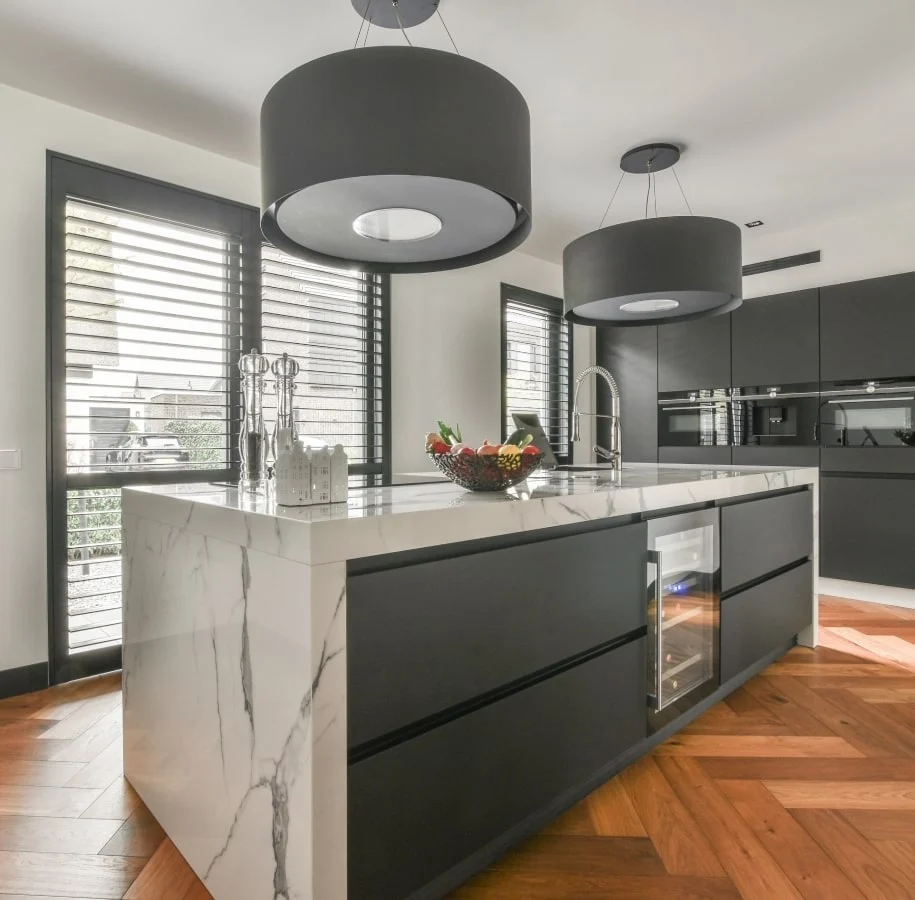
Mounted below the countertop surface, exposing the countertop edge and allowing the countertop to be wiped directly into the sink. The cleanest, most contemporary installation method for bathroom vanities with stone countertops.
Advantages: Clean line, easy countertop cleaning, works with any countertop material
Considerations: Requires stone or solid surface countertop, more complex installation
Best for: Contemporary, Transitional, Modern Farmhouse vanities
A freestanding basin that sits on top of the countertop surface. Creates a dramatic visual statement and requires a taller-than-standard faucet. Common in spa-style and contemporary bathrooms.
Advantages: Strong visual statement, works with any countertop, wide material choice
Considerations: Higher faucet height required, basin rim can collect debris, less practical for daily family use
Best for: Contemporary, Spa, Master bathroom applications
Drops into a cut-out in the countertop with a rim that rests on the countertop surface. The most common installation method for laminate and tile countertops. Practical and straightforward to replace.
Advantages: Works with any countertop material, simple installation, easy to replace
Considerations: Rim creates a cleaning ledge, less contemporary appearance
Best for: Traditional, Transitional, family bathroom applications
A freestanding sink with an integral column base. No vanity cabinet. Exposes plumbing but provides a classic, airy look appropriate for smaller bathrooms or powder rooms with period architecture.
Advantages: Classic appearance, visually light, appropriate for period architecture
Considerations: No storage, exposed plumbing, no countertop surface
Best for: Victorian, Traditional, powder room applications
All bathroom sink installations are coordinated with the vanity cabinet build. The sink mounting method, the countertop material, and the faucet specification are resolved at the design stage before cabinet construction begins. We do not install sinks as a standalone service; they are part of a complete bathroom vanity project.
For undermount bathroom sinks, vitreous china and ceramic are the most common materials in the Chicago suburban market. They are non-porous, stain-resistant, easy to clean, and available in every shape and size. Cast iron undermounts are heavier and more expensive but extremely durable. Vessel sinks are available in ceramic, glass, stone, and concrete depending on the aesthetic goal.
Undermount sinks require a solid, water-resistant countertop material that can be polished to a finished edge around the sink cutout. Quartz, granite, and quartzite are the standard choices for bathroom vanity countertops with undermount sinks. Laminate countertops are not suitable for undermount installation because the substrate is not water-resistant at the cut edge.
Yes. A 60-inch vanity can accommodate two standard undermount sinks with adequate counter space between them. The minimum comfortable double-sink vanity is 60 inches wide; we recommend 72 inches or wider for a double-sink master bathroom where counter space is a priority. We specify the sink layout as part of the vanity drawing at the design stage.
Sink selection is part of every kitchen and bathroom vanity design conversation. We bring specifications and samples and match the sink to your project.
Schedule Free Consultation